Week 15 4 May
Presentations are on final exam day May 13th at 8 am.
Please contact me if you would like to schedule a meeting to discuss your presentation material, if you need help with anything.
Monday: Continue working on Assignment 10.
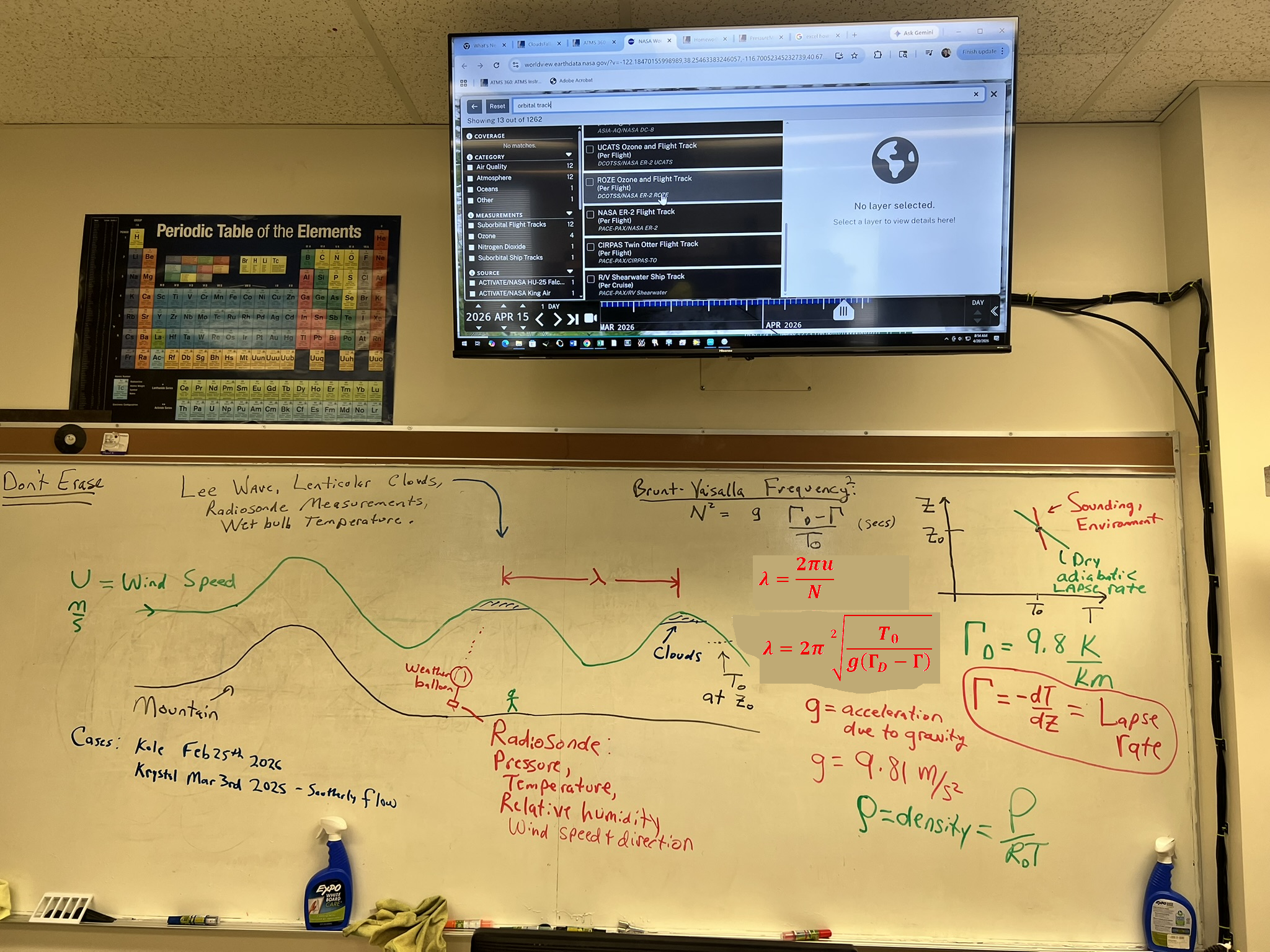
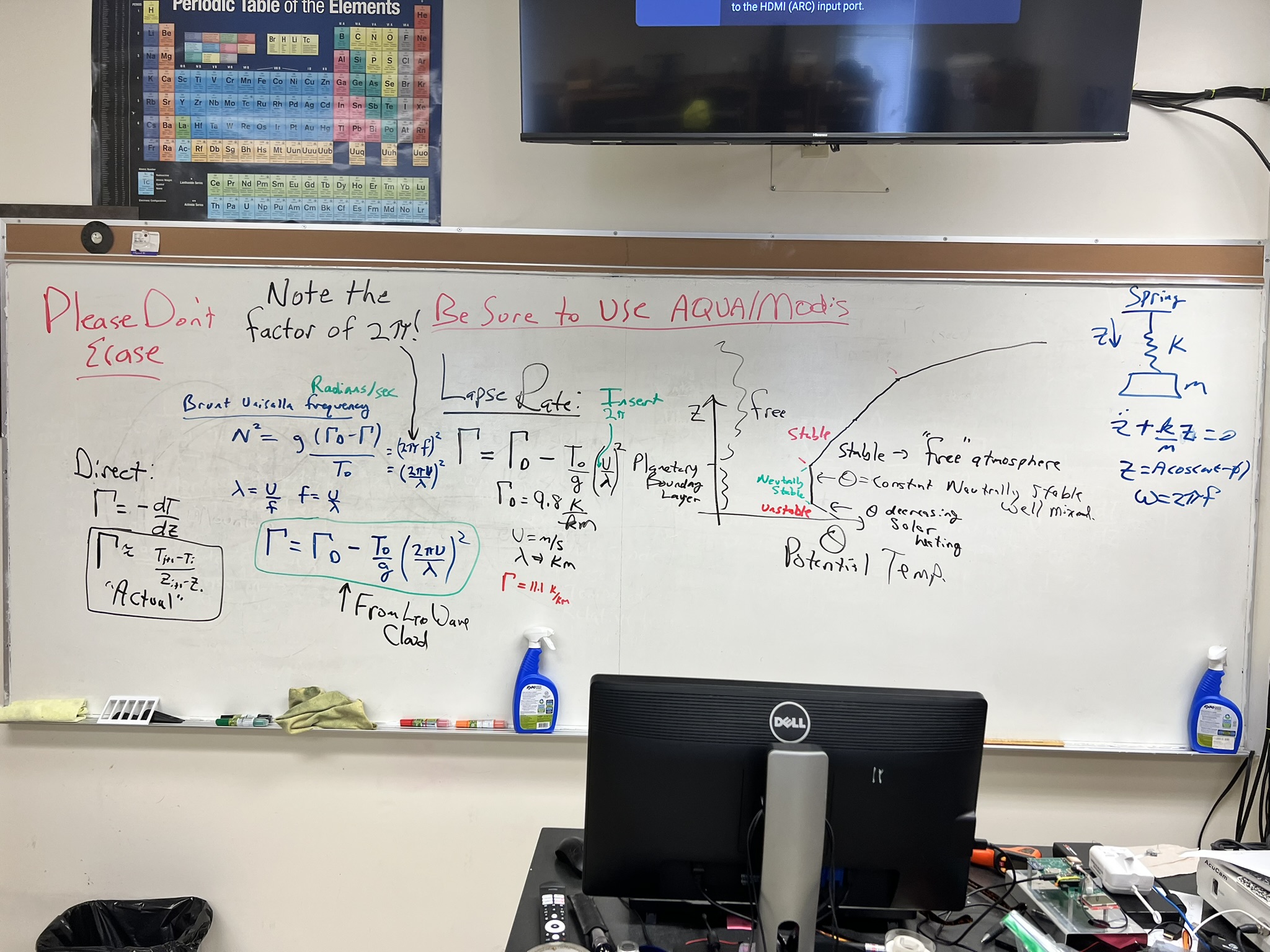
Whiteboard notes.
We will confirm that everyone has these components for their case study.
Animations can be converted from AVI to MP4 for use in powerpoint using https://cloudconvert.com/avi-to-mp4.
EXTRA CREDIT FOR TOPIC 4 AS TIME PERMITS:
Calculation of the lapse rate as a function of height using low resolution sounding data from the University of Wyoming site.
Excel sheet example for calculating the lapse rate from the lee wave cloud wavelength, and other sounding information.
It compares this with the observed lapse rate, also calculated with the spreadsheet.
Identify the most likely altitude where the lapse rate from the lee wave cloud wavelength matches the observed lapse rate at some altitude.
Obtain the cloud top radiance and convert it to the wave cloud top temperature using the Channel 13 clean IR imagery.
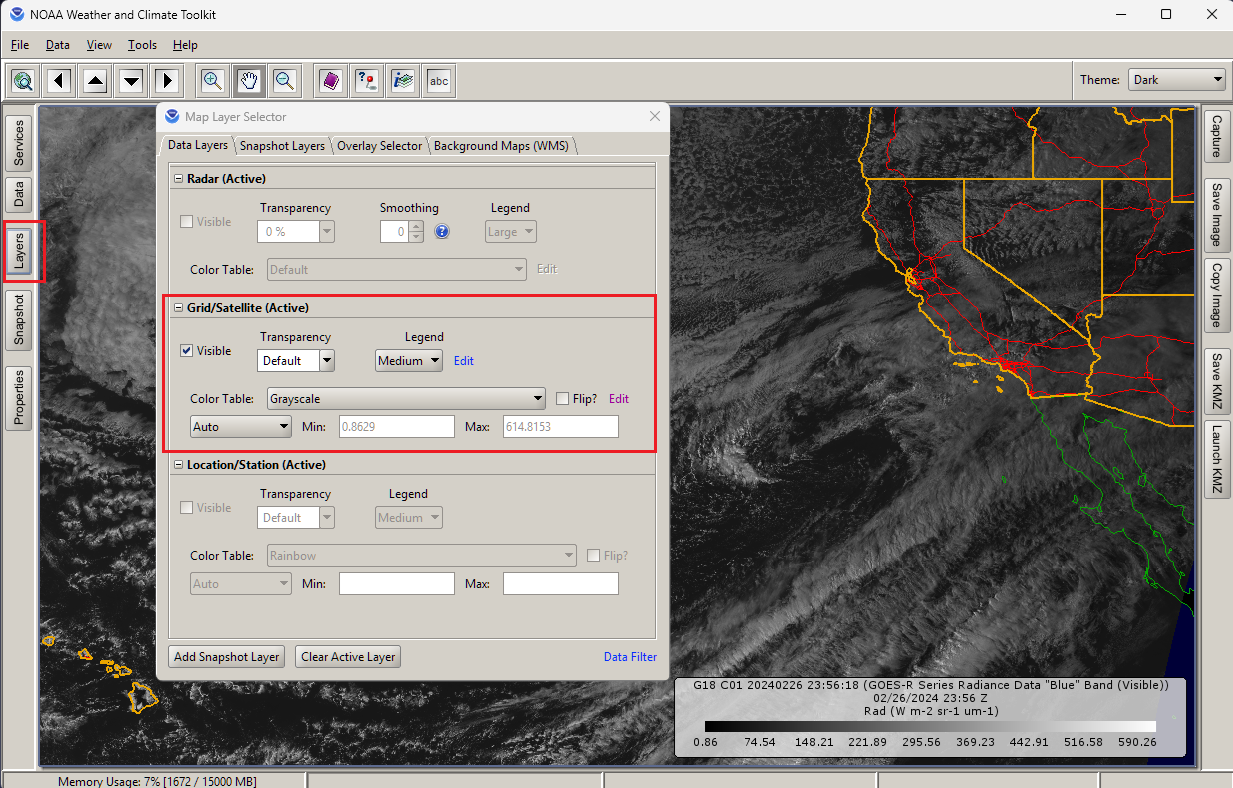
Hover over a single loaded image using WCT and note the radiance value.
Use this temperature and your sounding to obtain the cloud top pressure.
This helps identity the layer of the atmosphere responsible for the lee wave cloud.
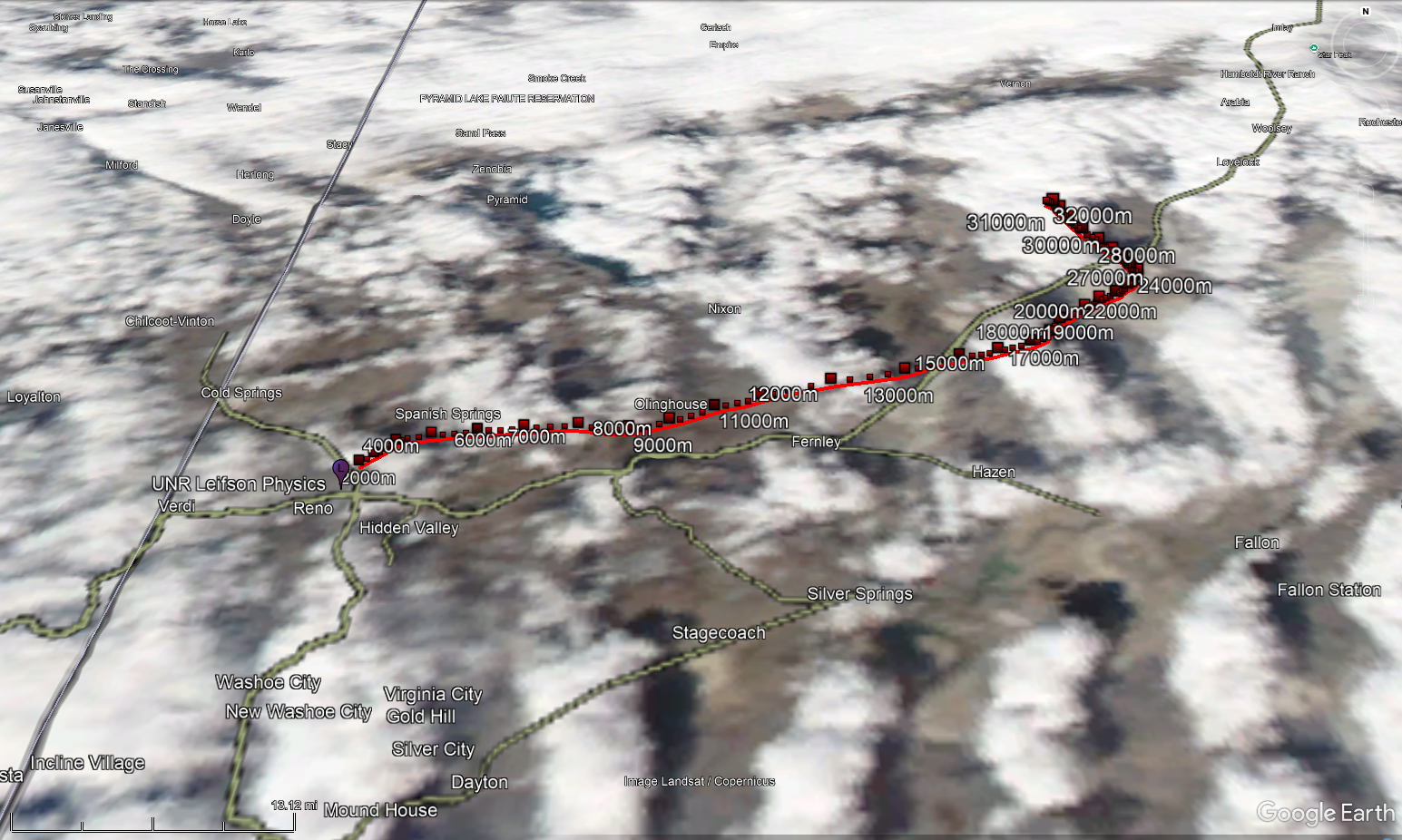
To investigate further, save the satellite image from Aqua MODIS Worldview at a KMZ file. Read it into Google Earth.
Use this script to obtain a balloon trajectory file in KML format for input Google Earth.
Here's an example.
Example of an interesting day, 26 February 2024: Wide view, very wide view, all.
Week 14 27 April
Friday: NOTE: A factor of 2 pi corrected the equation for the lapse rate calculation based on the lee wave cloud observation.
See the Whiteboard Notes.
Excel sheet for calculating the lapse rate from the lee wave cloud wavelength, and other sounding information.
It compares this with the observed lapse rate. (updated to include the factor of 2 pi.
We will finish obtaining the satellite imagery (GOES visible and IR) using the Weather and Climate Toolkit (WCT).
Obtain the cloud top radiance and convert it to the wave cloud top temperature using the Channel 13 clean IR imagery.
Use this temperature and your sounding to obtain the cloud top pressure.
Hover over a single loaded image using WCT and note the radiance value.
This helps identity the layer of the atmosphere responsible for the lee wave cloud.
Presentations start on Monday.
Wednesday: Excel sheet for calculating the lapse rate from the lee wave cloud wavelength, and other sounding information. It compares this with the observed lapse rate.
Monday: Continue working on Assignment 10. Whiteboard notes.
Assignment 10. You'll need to choose a day for lee wave study and email with your choice we can make sure everyone has a unique case study.
We'll use AQUA MODIS polar orbiting satellite imagery to choose a date (example) and it will need to have a corresponding radiosonde measurement (example low resolution, high resolution).
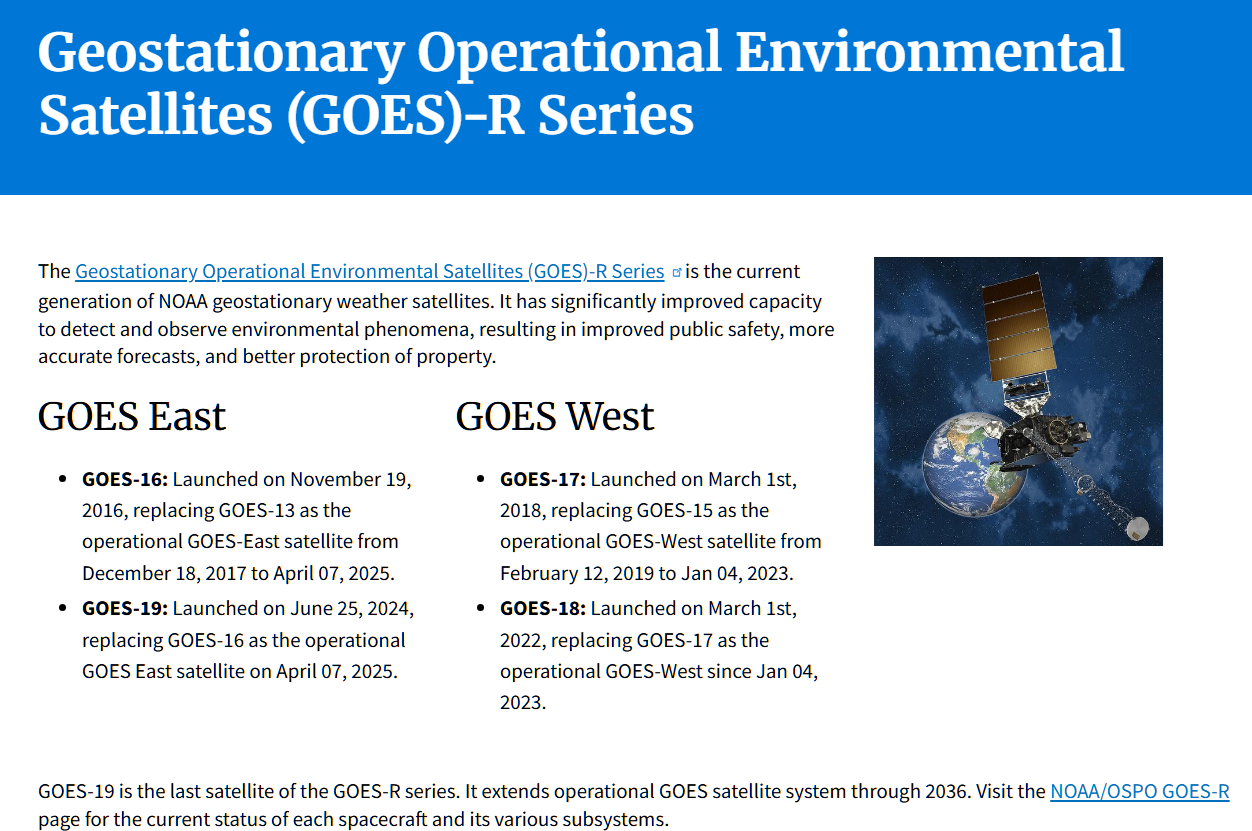
We will use the WCT for GOES imagery. Recent GOES imagery can be viewed also.
Week 13 20 April
Friday: Discussion of soundings for case studies. Used laminated soundings to illustrate their use.
Wednesday: Discuss dewpoint and wetbulb temperature with examples.
Wet bulb will be demonstrated with moistened and dry cotton pads and use of an infrared thermometer to measure them.
Dewpoint/frostpoint temperature was demonstrated by measuring the temperature of a glass slide taken out of the freezer, and warmed until dew just begins to evaporate.
Images.
Monday: We discussed the lab objectives and lee wave clouds. Whiteboard notes.
Homework 10. You'll need to choose a day for lee wave study and email with your choice we can make sure everyone has a unique case study.
We'll use AQUA MODIS polar orbiting satellite imagery to choose a date (example) and it will need to have a corresponding radiosonde measurement (example low resolution, high resolution).
We will use the WCT for GOES imagery. Recent GOES imagery can be viewed also.
Week 12 13 April
Continue HW 9, especially the measurements with the sensors at higher and lower elevations.
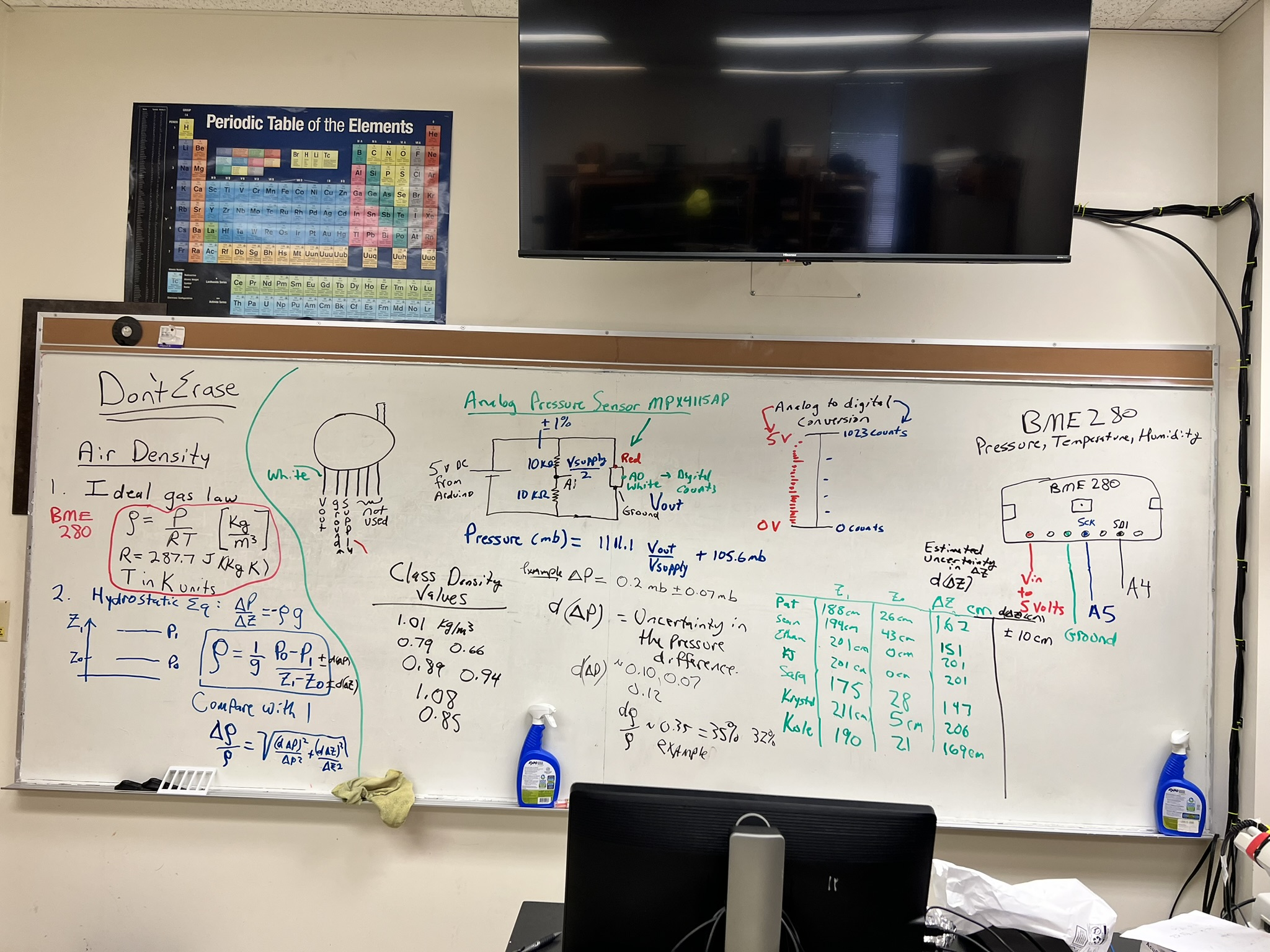
Bring questions to class about the lab report. Whiteboard notes.
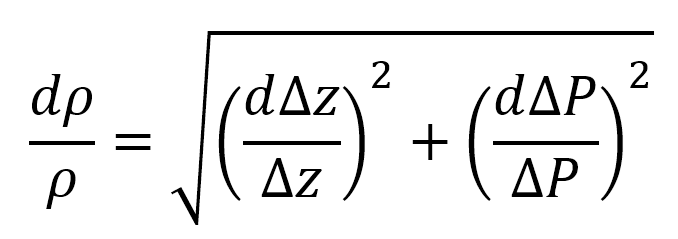
Uncertainty in the density measurement obtained using the hydrostatic equation:
Preparation:
Read HW9.
Read about the Arduino.
Related Information:
Data sheets for the analog sensor and for the digital sensor.
Week 11 6 April
Continue HW 9, pressure measurements. Evaulate pressure measurements over the weekend.
Preparation:
Read HW9.
Read about the Arduino.
Related Information:
Data sheets for the analog sensor and for the digital sensor.
Week 10 30 March
Continue HW 9, pressure measurements.
Preparation:
Read HW9.
Read about the Arduino.
Related Information:
Data sheets for the analog sensor and for the digital sensor.
Week 9: 16 March
Begin HW 9, pressure measurements.
Preparation:
Read HW9.
Make an account with Tinker Cad.
We will use this to learn how to work with microcontrollers, sensors, and electronics.
Related Information:
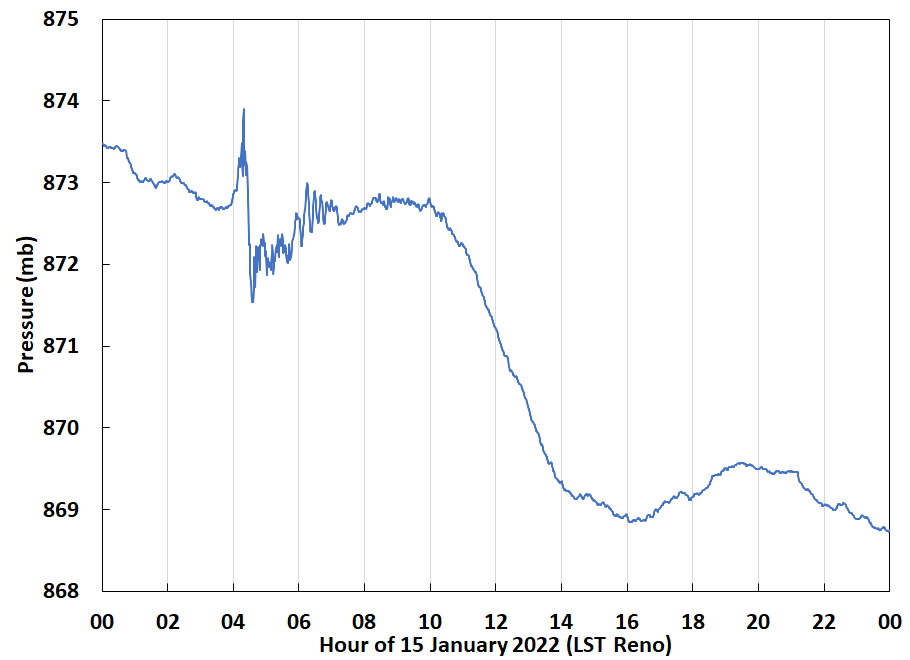
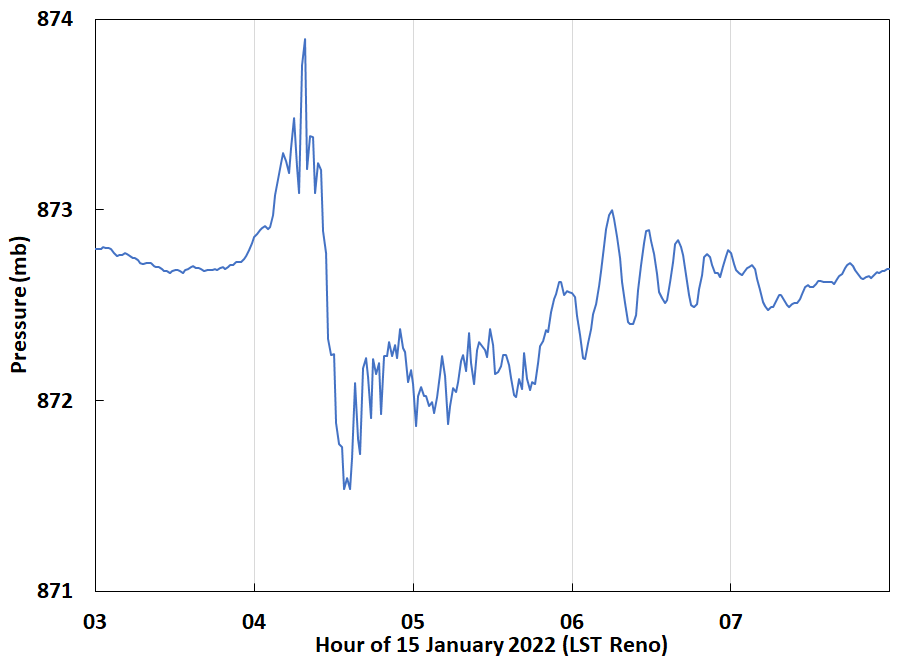
Tongan volcano erupts in 2022, scroll down to see the mid level water vapor animation and shock wave.
A pressure disturbance was measured at UNR and other places. Low temporal resolution: higher resolution.
Week 8: 9 March
Continue HW 8, severe storm case-study using meteorological radar.
Friday: Presentations. Turn presentions in to WebCampus.
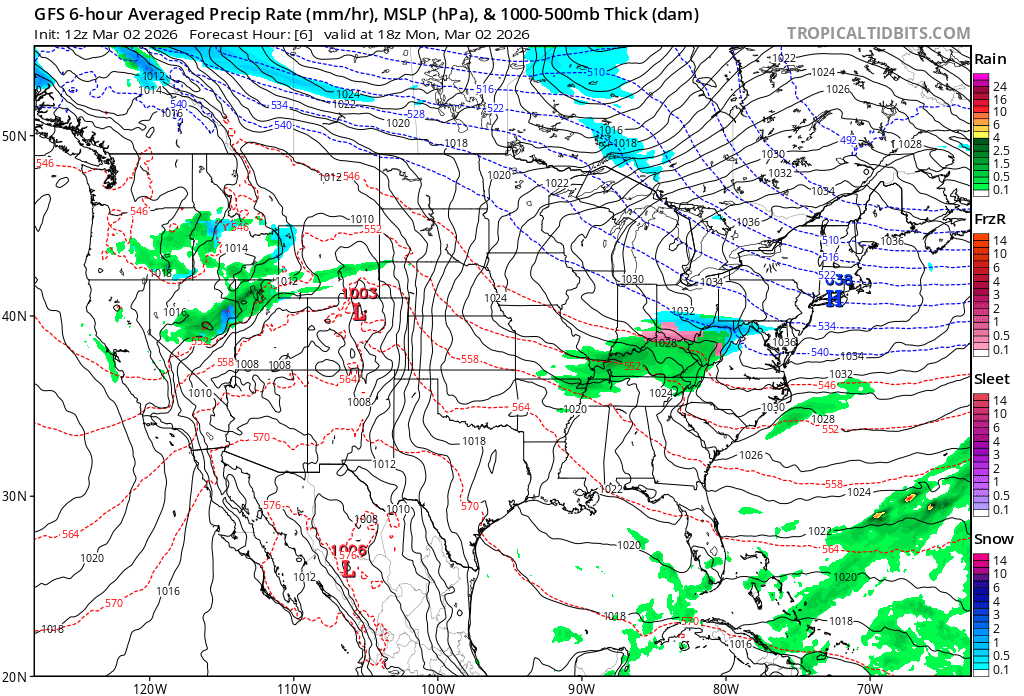
High resolution radar forecast for the Continental US.
Wednesday:
Finish backtrajectory calculation and discussion.
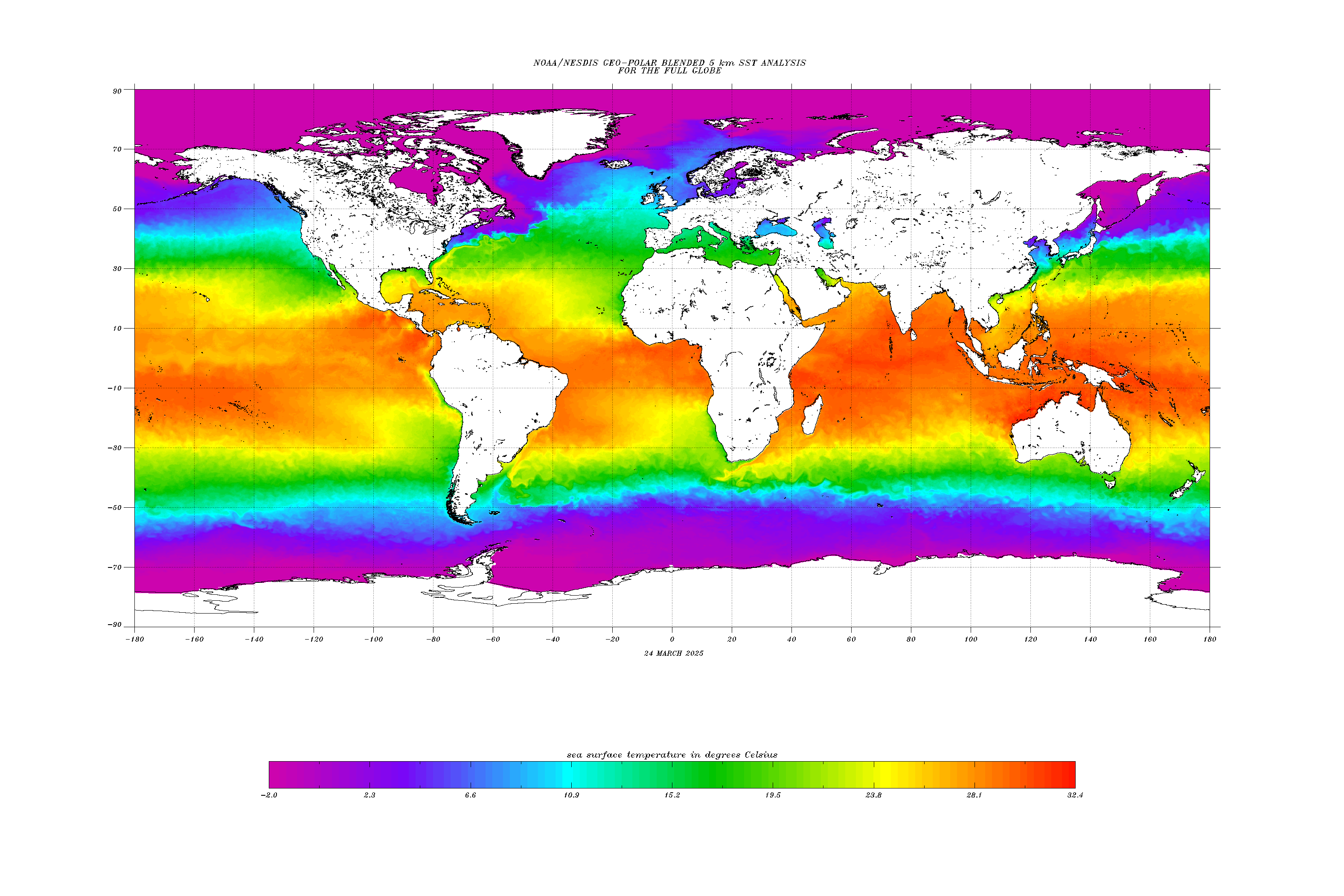
Sea surface temperature and anomaly for discussion with backtrajectory analysis (compare Chicago and Iceland temperatures differences using Google Earth.)
Monday: Continue with part 2.
Range folding discussion and reason for two scans at the same angle (local backup).
Introduction to Doppler Radar.
Another introduction to Doppler radar. Scroll down to see images.
Radar Doppler velocity interpretation: See slides 36-43.
Week
Week 7: 2 March
Begin HW 8, severe storm case study using meteorological radar.
Introduction to Doppler Radar.
Another introduction to Doppler radar. Scroll down to see images.
Radar Doppler velocity interpretation: See slides 36-43.
Monday: Looked at part 1, introduction, and saw a radar brightband and interesting velocity profile for a storm today in the Eastern US.
Model for precipitation type we looked at in class.
Email me the date, time, and location of the event you want to use.
I'll let you know right away if it is suitable and to make sure no one else is doing the same case study.
Example: Case study of a severe storm with a hook echo and a debris ball.
Week 6: 23 February
Case study of a severe storm with a hook echo and a debris ball (related to Wednesday's discussion).
Wednesday and Friday: Meet in class.
Discuss questions 16-24 of Assignment 7. Start on Assignment 8.
Monday: Meet on Zoom.
Outcome: Z=ND6 . Notes in PDF format (and in OneNote format, right click, download, open with OneNote)
Week 5: 16 February
Wednesday and Friday: Meet on Zoom due to snow.
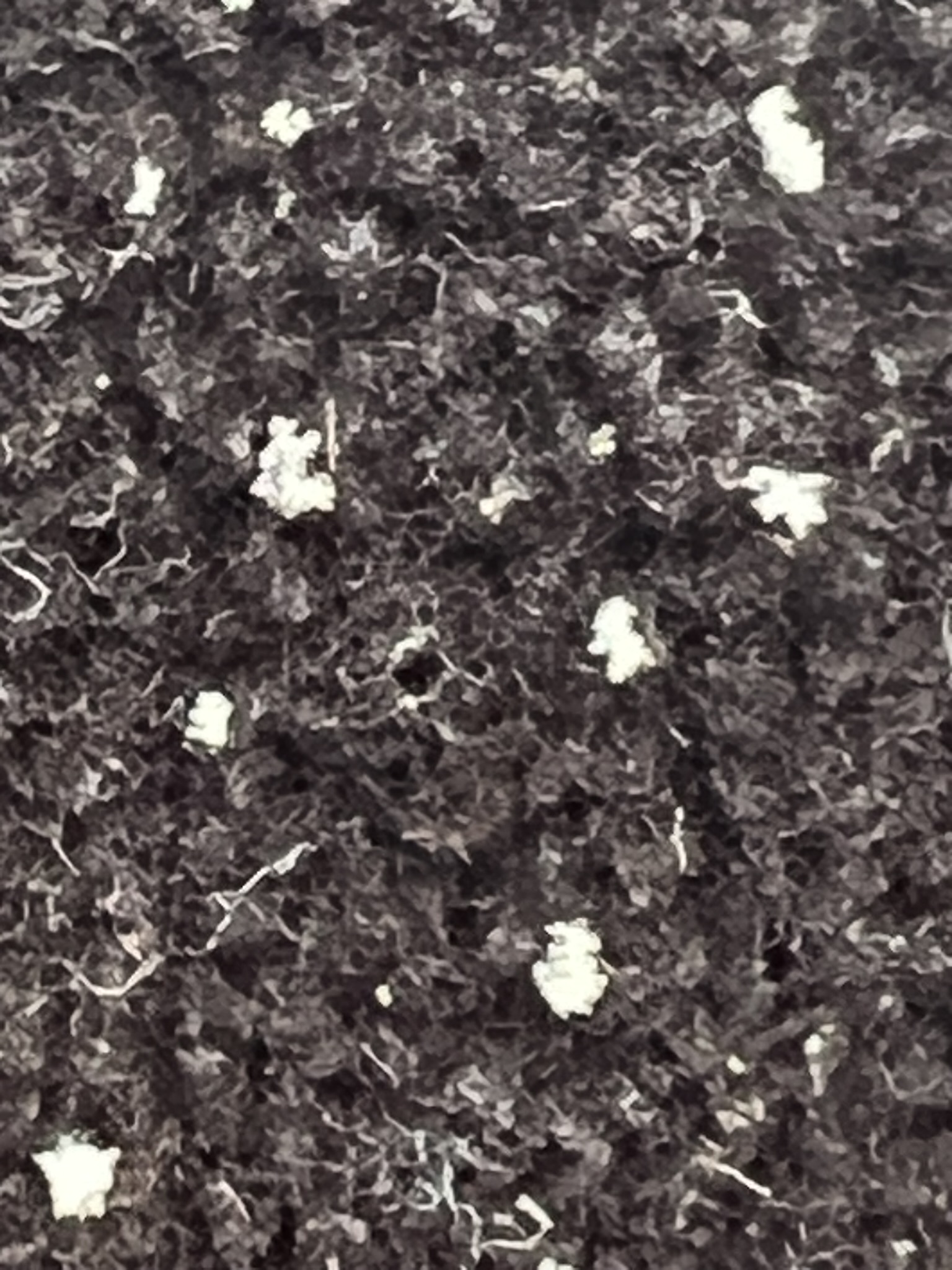
Rimed snow flakes from 2/19/2026. How to photograph snow, with examples.
Week 4: 9 February
Monday-Friday:
Week 3: 2 February
Friday:
UNR and other data from the Ambient WS5000 weather station .
Student Preparation for Class: We will continue with assignment 6. Bring questions to class.
Monday and Wednesday:
We will continue data analysis for the January 1-17 2026 case study. Bring your laptop or use the lab computers. If using lab computers, be sure email yourself the file or bring a USB drive to class.
UNR and other data from the Ambient WS5000 weather station .
Student Preparation for Class: We will continue with assignment 6. Bring questions to class.
Some of the UNR and Desert Research Institute (DRI) meteorological instruments.
Atmospheric Instruments Textbook: See Appendix A on lab reports
Free through UNR Library: Online textbook for atmospheric instrumentation.
Week 2: 26 January
Monday and Wednesday:
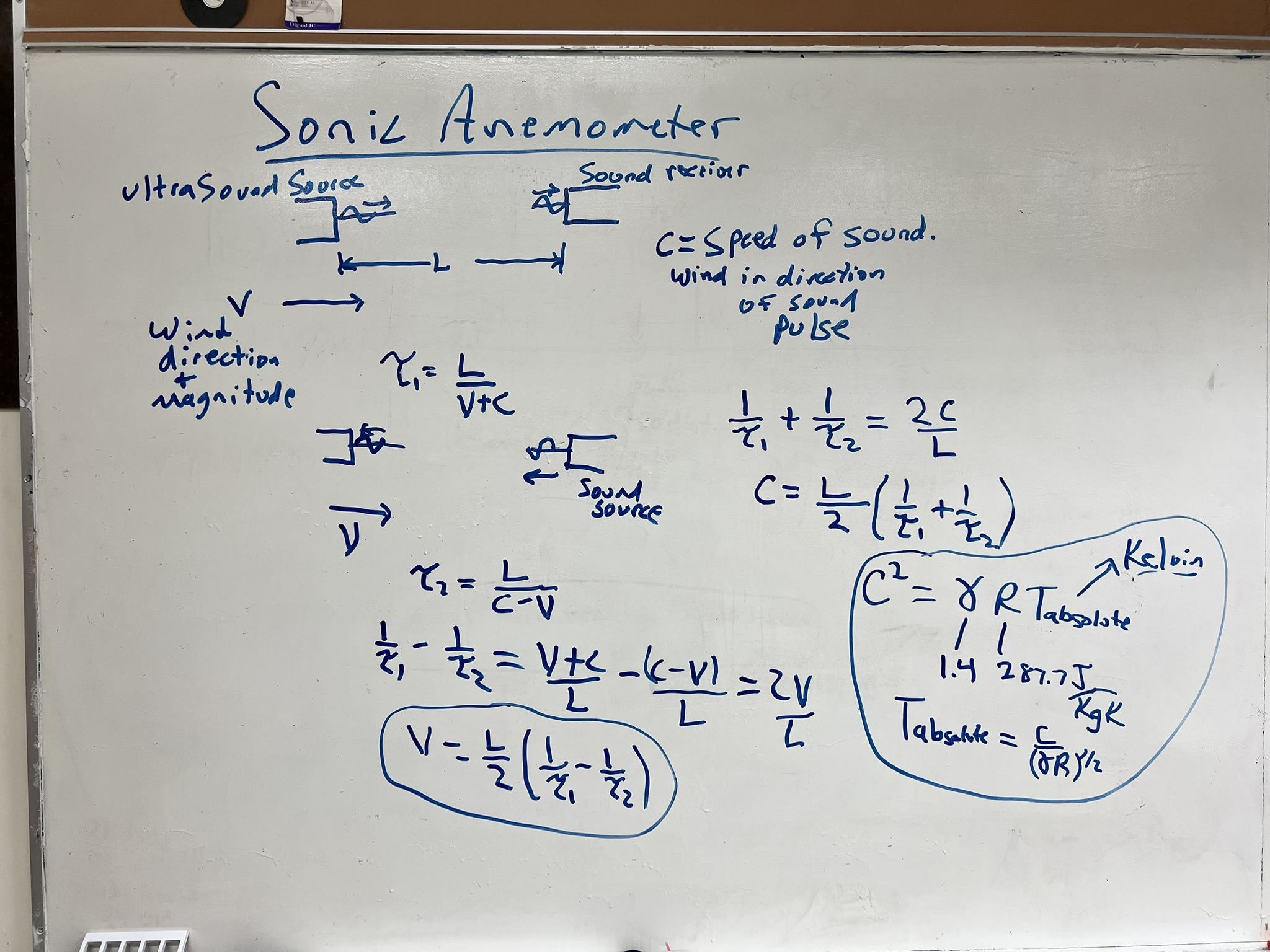
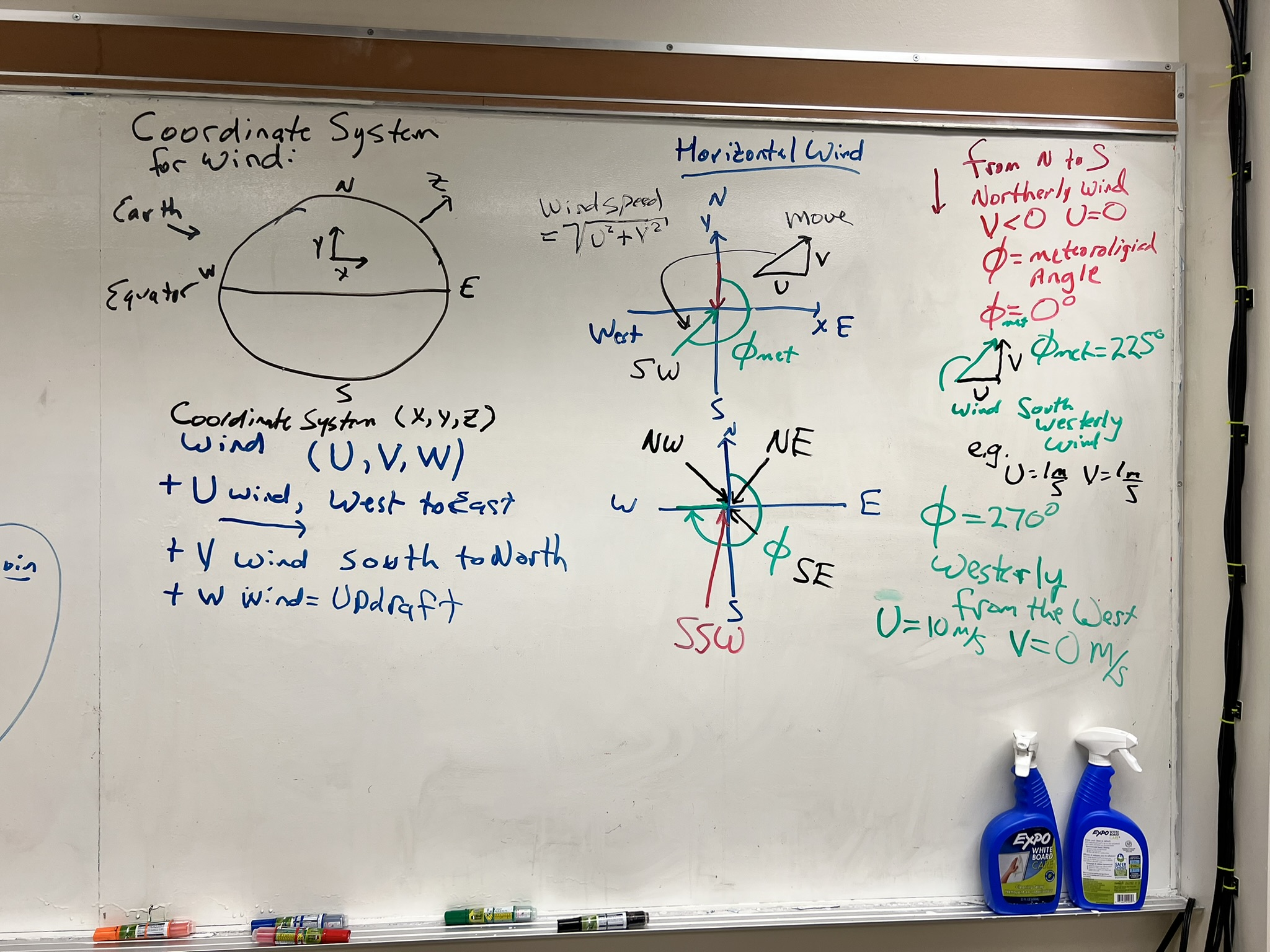
Sonic anemometer measurement discussion. (Whiteboard notes).
Draw and explain U, V, and W wind components, meteorological wind direction and wind speed. (Whiteboard notes).
We will start data analysis on Wednesday. Bring your laptop or use the lab computers. If using lab computers, be sure email yourself the file or bring a USB drive to class.
UNR and other data from the Ambient WS5000 weather station .
Student Preparation for Class: Complete part 1 of assignment 6. Bring questions to class.
We will continue with assignment 6.
Some of the UNR and Desert Research Institute (DRI) meteorological instruments.
Atmospheric Instruments Textbook: See Appendix A on lab reports
Free through UNR Library: Online textbook for atmospheric instrumentation.
Week 1: 19 January
Friday:
Student Preparation for Class: Read assignment 6 and bring questions to class.
Continue with assignment 6.
Some of the UNR and Desert Research Institute (DRI) meteorological instruments.
Wednesday:
Introductions: Name, major, and goals for this class.
Places to learn about what is going on in this class:
Daily Notes (here).
Assignments. Assignments 1-6 have been posted, review them.
Syllabus.
Webcampus.
Atmospheric Instruments Textbook:
Free through UNR Library: Online textbook for atmospheric instrumentation.
How to keep a lab notebook to record what you do and help in lab report writing:
a. Make a table of contents at the back.
b. Number the pages so you can add entries to the table of content.
Discussion of lab notebooking from CU.
A free, online Atmospheric Science textbook is available for students new to the field.
Free online Introductory Textbook for Atmospheric Science and local backup.
.